
What Is a Dedicated Circuit, and When Do You Need One?
Flip on the microwave while the toaster is running, and the kitchen goes dark. Plug in a space heater, and the same breaker clicks off a minute later. Behind those small annoyances sits a simple wiring principle that decides how power gets shared inside your walls, and whether one hungry appliance is quietly starving the rest of the room. The fix usually has a name: a dedicated circuit.
What a Dedicated Circuit Actually Is
A dedicated circuit is one wire run and one breaker feeding a single appliance, with nothing else tapped into it. Compare that to a general-purpose circuit, where one breaker feeds a whole chain of outlets and light fixtures spread across a room or two. Everything on that shared line draws from the same rating, so the loads add up. A dedicated line gives its appliance the entire circuit to itself, from the breaker in the panel to the outlet or hardwired connection at the appliance. No sharing, no competition for capacity.
That distinction matters because electrical loads stack. Two 8-amp devices on the same 15-amp circuit are fine until they run at once and pull 16. On a dedicated circuit, the appliance never has to negotiate with a neighbor.
Why High-Draw Appliances Get Their Own Line
Most of what plugs into a wall sips power. A lamp, a phone charger, and a clock do not stress a shared circuit. The trouble comes from appliances that pull heavy current, especially motors and heating elements that run for long stretches. When one of those shares a line with other outlets, the combined draw can push past what the wire is rated to carry. The breaker trips to stop it, or if something is miswired, the conductor heats up. A dedicated circuit removes the pileup: the appliance gets full capacity, the wire stays inside its limit, and you stop chasing nuisance trips.
Here is where each of the usual suspects lands.
| Appliance | Why it needs a dedicated line |
|---|---|
| Electric range, oven, cooktop | Heating elements pull heavy, sustained current |
| Electric dryer | Motor plus heating coil, long run times |
| Electric water heater | Large heating load, cycles for long periods |
| Central AC / heat pump | High startup surge, runs for hours in the heat |
| Microwave | Short but heavy spikes that trip shared kitchen lines |
| Dishwasher | Motor plus heating element for the dry cycle |
| Garbage disposal | Motor draws a hard spike on startup |
| Refrigerator | Compressor cycles around the clock, sharing risks of food loss |
| EV charger | Sustained heavy load, sometimes for hours at a stretch |
The kitchen concentrates several of these in one small footprint, which is why so many kitchen appliances end up on lines of their own.
Reading the Sign That You Need One
The clearest signal is a breaker that trips tied to a specific appliance. If the disposal runs and the breaker drops, or the microwave and the coffee maker together kill the circuit, but either one alone is fine, that line is carrying more than it should. Occasional trips from a genuine fault are one thing; a breaker that trips on a predictable pattern, whenever a certain appliance runs or two run together, is telling you the load has outgrown the circuit.
A tempting shortcut is to swap the tripping breaker for a bigger one. Do not. The breaker is sized to protect the wire behind it, not the appliance. A 15-amp breaker guards 14-gauge wire; a 20-amp breaker guards 12-gauge. Put a 20-amp breaker on a 15-amp circuit, and you have removed the wire's safety limit, so it can now overheat without ever tripping. The correct answer is a new circuit sized for the load, not a larger breaker forcing more current down an undersized wire.
Pool And Spa Equipment
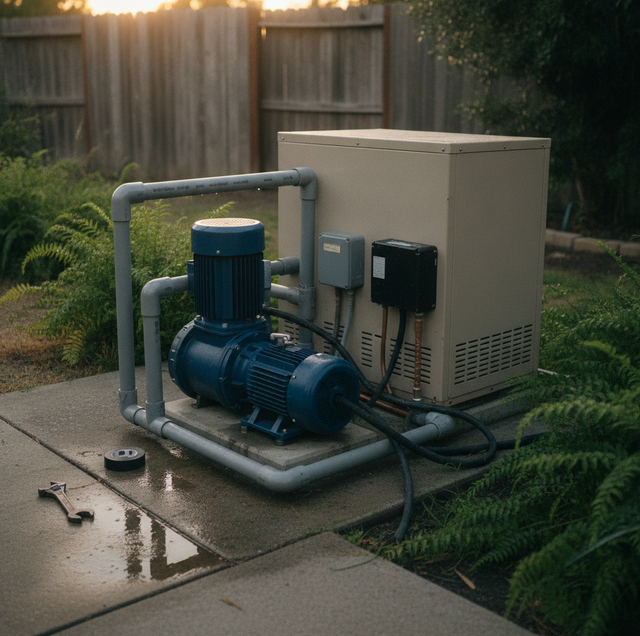
Backyard pool and spa gear deserves a mention of its own. Pump motors, spa heaters, and salt systems draw real power and run for hours a day through the swim season. That kind of steady, heavy demand belongs on its own circuit rather than sharing with patio outlets or path lighting. Pool equipment also usually calls for outdoor-rated protection and grounding suited to a wet location, another reason it is set up as a standalone line rather than tacked onto whatever outlet happens to be nearby.
How Your Panel Decides What Is Possible
Whether a new dedicated circuit can be added comes down to two things in your panel: open slots and available capacity. A breaker needs a physical space to land, so the panel has to have an empty slot or room for a tandem breaker where the panel allows it. Capacity is the bigger question. Every panel has a total service rating, and the loads already on it eat into that. Add a heavy circuit to a panel already near its ceiling, and there is nothing left to give.
Older homes often run smaller service or arrive already full, so an EV charger or a new AC circuit can be the moment a panel upgrade comes into the conversation. A licensed electrician runs a load calculation to see what the existing service can support before adding anything, so the new circuit does not overload the panel itself.
The Difference Between 120-Volt And 240-Volt Circuits
Dedicated circuits come in two flavors, and the appliance decides which. A standard 120-volt dedicated circuit uses one hot wire and a single-pole breaker; that covers a microwave, dishwasher, disposal, or refrigerator. Big heating and motor loads, an electric range, an electric dryer, a water heater, central AC, or an EV charger run on 240 volts, which uses two hot wires and a double-pole breaker taking up two slots in the panel. The 240-volt setup delivers more power for the same current, which is why the heaviest appliances are built for it. The outlet shapes differ, too, so a dryer plug will not fit a standard receptacle, a built-in reminder that these are not interchangeable.
Getting The Right Circuit For The Right Appliance
A dedicated circuit is not a luxury add-on; it is how a home keeps its heaviest appliances fed without dragging down everything around them. Once you can spot the pattern, a breaker that trips on the same appliance every time, an addition like an EV charger or pool pump, an old panel with no room left, the next step is a load check and a properly sized line rather than a guess or a bigger breaker.
Frequently Asked Questions
Try a quick test at the panel. Switch off the breaker you think feeds the appliance, then walk through the house and see what else went dead. If only that one outlet or appliance loses power and every nearby receptacle, light, and device stays on, the line is truly dedicated. If flipping that breaker also kills the counter outlets, a hallway light, or the outlet in the next room, the appliance is sharing a general-purpose circuit and does not have a line of its own. Label the breaker once you know, so the next person is not guessing. This test also catches a common surprise in older homes, where an outlet that looks like it should be dedicated turns out to be daisy-chained to half the room.
They sound alike but describe different things. A dedicated circuit is the whole path from the breaker to the appliance, with nothing else attached. A dedicated outlet is the receptacle sitting at the end of that path, and for a true single-appliance line, it is often a single-receptacle version, called a simplex outlet, with just one plug opening instead of the usual two. That single opening is deliberate: it makes it physically impossible for someone to plug a second device into the same line and quietly overload it. So a fridge or microwave on its own circuit may sit behind a simplex outlet, while a shared kitchen counter uses the familiar double receptacle. The circuit is the electrical part; the outlet is the visible clue.
Some do, depending on where the appliance lives. Circuits in damp or outdoor spots, kitchens near a sink, bathrooms, garages, laundry areas, and pool equipment commonly call for ground-fault protection that shuts the power off in a fraction of a second if current strays where it should not, which guards against shock. Many living-area circuits also use arc-fault protection, which watches for the erratic sparking that can start a fire inside a wall. On a dedicated line, these devices usually live in the breaker itself rather than the outlet. The benefit is that the protection covers only that one appliance, so a fault trips only its line rather than taking out an entire shared circuit, and you know exactly what shuts off.
Their running draw is modest, but each one carries a motor or compressor, and those pull a hard surge the instant they start, well above what they use once they are humming along. A fridge compressor kicks on and off around the clock, a disposal spikes the moment you flip the switch, and a microwave hits the line in heavy pulses. Put two of those startup surges on the same shared kitchen circuit at the same moment, and the combined inrush can trip the breaker even though neither appliance is large on paper. A dedicated line means each motor gets the full circuit to absorb its own startup kick without colliding with a neighbor's.
Because an EV charger runs flat out for hours, it counts as a continuous load, and continuous loads are wired with headroom rather than run right at the edge of the circuit's rating. The wire and breaker are sized above the charger's steady pull, so the conductor never sits at its absolute limit for a long charging session, which keeps it from heating up over time. That is why a charger drawing a given current gets a circuit rated noticeably higher, not one matched exactly to the number on the unit. The same thinking applies to any appliance that runs long and hard, and it is one more reason an EV circuit often forces a fresh look at whether the panel has room.
Not always. A full panel is a slot problem first, and there are a few ways around it before a full service upgrade. Where the panel allows, tandem or half-height breakers fit two circuits into the space of one, freeing room without touching the main service. A subpanel is another route: a smaller box fed from the main panel that adds slots for new circuits nearby, handy for a garage EV charger or a pool pad. A full service upgrade only becomes necessary when the load calculation shows the existing service itself cannot carry the added demand, not merely that the slots ran out. One more reason to add a proper line rather than improvise: plumbers and appliance installers often require a dedicated circuit for a water heater or range to honor the equipment warranty, so a cut corner can cost you coverage later.
If a breaker keeps tripping on one appliance or you're adding an EV charger or pool pump, we can size and install the right dedicated circuit. Zimmerman Electric Company serves Surprise, Sun City, and Peoria. Call (602) 497-3365.
