
What Causes a GFCI Outlet to Keep Tripping? 8 Culprits
Quick Answer: A GFCI trips when it detects electricity leaking off the circuit instead of returning the way it should; even a tiny amount, around 4 to 6 milliamps, is enough. Repeated tripping means it keeps sensing that leak. The usual causes are moisture in an outdoor or bathroom box, a failing appliance plugged in downstream, several devices leaking a little each, a wiring fault, or an aging GFCI that has gone nuisance-trippy. The fastest way to narrow it down: unplug everything on the circuit, reset, and add loads back one at a time.
You plug the pressure washer in on the patio, pull the trigger, and the outlet goes dead. You walk over, push the little button on the receptacle, hear the click, and it works again, for about a minute. Then it dies again. Or maybe it's the bathroom outlet that quit overnight and won't come back, or a garage receptacle that pops every time the freezer kicks on. A GFCI that keeps tripping is annoying, but it is also telling you something specific. The trick is learning to read what it's saying instead of jabbing the reset button and hoping.
What a GFCI Is Actually Watching For
A GFCI, ground-fault circuit interrupter, does one job, and it does it obsessively. It measures the current flowing out on the hot wire and compares it, instant by instant, to the current coming back on the neutral. In a healthy circuit, those two numbers match: every bit of electricity that leaves comes back. If they stop matching, if even a few thousandths of an amp go missing on the way back, the GFCI knows that current has found another path. Usually, that other path is through water, through a damaged wire, or, in the worst case, through a person. So, it cuts power in a fraction of a second.
The threshold is small on purpose. Most GFCIs trip at a leak of roughly 4 to 6 milliamps, thousandths of an amp, a level low enough to interrupt a shock before it can stop a heart. Think of it like a cashier who counts the money in the drawer against the receipts at the end of every shift. A dollar short and the drawer gets locked; nobody argues that the register is broken. The GFCI is doing the same audit thousands of times a second, and when it keeps locking the drawer, it is because the count keeps coming up short.
That reframes the problem. A GFCI that trips repeatedly is not usually malfunctioning. It is reporting that current is leaking somewhere, real leakage, or apparent leakage that looks the same to the sensor. Your job is to find which of a handful of causes is behind the short count.
Moisture: The Most Common Culprit
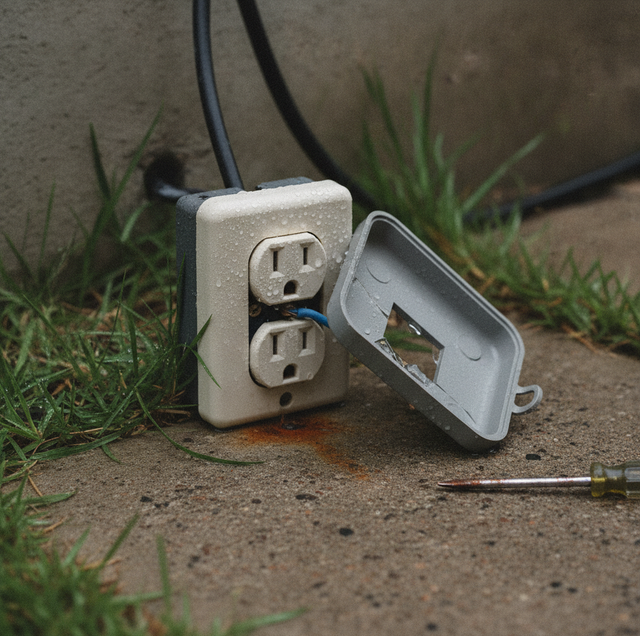
Water conducts electricity, and it does not take a puddle. Humidity condensing inside an outdoor receptacle, rain driven into a box with a cracked cover, a garage outlet near a water heater, a bathroom receptacle catching steam, or moisture in a pool-equipment or irrigation box, any of these creates a slow leakage path to ground. It is exactly what the GFCI exists to catch, which is why outdoor and wet-location circuits trip more than any others.
This is also why timing matters. If your outdoor outlets start tripping after a heavy downpour, or a receptacle gets flaky on humid mornings and recovers once the day dries out, moisture is the leading suspect. Climate cuts both ways: bone-dry heat bakes gaskets and covers brittle so they crack and let water in, and then humid spells supply the water that finds the crack. Open the offending box (with the breaker off), let it dry fully, and look for intrusion, a failed gasket, a missing weatherproof "in-use" bubble cover, or a conduit carrying water back to the box. Drying it out and sealing the entry point clears a surprising share of chronic outdoor trips.
A Failing Appliance Downstream
The second big cause is something plugged in. Motors and heating elements develop internal leakage as they age: insulation breaks down, a winding starts bleeding a little current to the metal chassis, and that current returns to ground instead of down the neutral. An old garage refrigerator, a sump or pool pump, a space heater, a well-worn power tool, or a cheap outdoor extension cord that got wet inside can each push the circuit past the trip threshold on its own.
Here is how you find it. Unplug everything on the affected circuit. Remember that a GFCI can protect other outlets downstream, so "everything" may include receptacles in the next room. Reset it. If it holds with nothing plugged in, the wiring and the device are fine; the fault is in the load. Now plug items back in one at a time, giving each a minute or two and, where relevant, actually running it. The GFCI will trip again when you reconnect the culprit. If it trips the instant a specific appliance's motor starts, that appliance is leaking under load, and it needs repair or retirement, not a new outlet.
When Many Small Leaks Add Up
Sometimes, no single device is at fault. Every electronic gadget leaks a tiny, harmless amount of current through its internal filtering, a phone charger here, a power strip of electronics there, an LED driver, a pump on standby. Individually, none of them is a problem. But a GFCI adds them all up, because it cannot tell "normal filtering leakage" from "dangerous fault leakage." Load enough devices onto one GFCI, and their combined trickle can creep toward that 4-to-6-milliamp line, especially on a warm day when everything is running.
You will recognize this pattern because the circuit trips when it is busy and behaves when it is quiet, and no single unplugged device fixes it, but removing a few of them together does. The cure is usually redistributing loads across more circuits rather than piling them behind one GFCI, which is a wiring change for your electrician to plan.
Wiring Faults and Long Runs
Some causes live inside the walls. A wire nicked during a past renovation, a neutral that is touching ground or a box downstream, degraded insulation, or line and load terminals reversed when the GFCI was installed will all cause trips that no amount of unplugging will stop. A reversed connection, in particular, can make a GFCI that will not reset at all, or one that trips the moment any load is applied.
Very long cable runs and shared neutrals add a subtler version of the same thing: the greater the length of wire, the smaller "capacitive" leakage the cabling itself carries, and a marginal circuit can sit right on the edge of tripping. There is also the double-protection trap, a GFCI receptacle wired downstream of another GFCI, or of a GFCI breaker at the panel. Two devices watching the same current will nuisance-trip each other, and the fix is to have only one GFCI guarding that path. Anything at this level is diagnosis and repair work inside boxes and the panel, which is where a homeowner's troubleshooting should hand off to a licensed electrician.
When the GFCI Itself Is Worn Out
GFCIs are electronic devices, and they do not last forever. The sensing circuitry and the internal contacts age, and an old unit can start tripping on phantom faults, or, worse, fail to trip when it should, which is why the test button exists. Manufacturers commonly specify a service life in years and recommend monthly testing using the built-in TEST and RESET buttons, though the exact figure is a manufacturer's estimate rather than a hard rule. Heat accelerates aging. A receptacle mounted on a west-facing garage wall, or one baking in an unconditioned space through hot summers, will wear faster than one in a climate-controlled hallway.
Suspect the device itself when you have already ruled out moisture and loads: the circuit trips with everything unplugged and dry, the wiring checks out, and the unit is simply old. A GFCI that no longer responds correctly to its own test button is done. Replacement is quick work for an electrician, but it should be a diagnosis of last resort; swapping the receptacle before you have cleared the real causes just hides a fault that the device was correctly reporting.
Do This, In Order, Before You Call
You can safely do the low-voltage detective work yourself. Keep your hands out of the boxes and the panel (the wiring level belongs to the electrician), and work through this sequence:
- Unplug everything on the circuit and reset: Include downstream outlets in other rooms that the GFCI may protect. A clean reset with nothing connected points you at a load; a refusal to reset points you at moisture or wiring.
- Add loads back one at a time: Give each a minute, run motorized items, and watch for the trip. The device you reconnect when it pops is your culprit.
- Check for moisture: Inspect outdoor, garage, patio, and bathroom boxes and covers. Let a damp box dry fully before you judge it.
- Note the timing: Does it trip instantly on reset, or only under load, or only when it's humid, or only when the circuit is heavily used? Each pattern points to a different cause, and it is the single most useful thing you can tell your electrician.
One firm rule runs through all of it: never defeat or bypass a GFCI to make the tripping stop. It is protecting a wet or faulted circuit, and removing it removes the shock protection at exactly the spot the code wants it most.
Frequently Asked Questions
Because a GFCI usually guards more than the outlet you're standing at. It protects everything wired downstream of it, so the leak that trips it can be at a completely different receptacle, an outdoor box taking on rain, a garage outlet with a freezer or a battery charger running on it, or a bathroom plug in another part of the house. Always-on loads are the common surprise: a fridge, a sump pump, or a trickle charger on the protected circuit can develop just enough leakage to pop the GFCI in the middle of the night with nobody touching it. To see the whole chain one GFCI is watching, press its TEST button and walk the house, noting which outlets go dead, and you'll find every point where a fault could be coming from.
Because the fault it is catching is often water itself. Moisture bridging the contacts inside an outdoor box, or condensation forming on a humid morning, gives current a path to ground that did not exist when everything was dry. That is why the trips track the weather, heavy after a storm, gone once the box dries. The setup is sneaky: months of dry heat crack the gaskets and "in-use" covers, and then the first humid stretch pushes water through the crack the heat created. A box that only misbehaves when it's wet is telling you where the water is getting in.
Yes. The sensing electronics and internal contacts wear out, and an aging unit can start tripping on faults that are not there. Press the built-in TEST button: a healthy GFCI should trip and then reset cleanly with RESET. If it will not trip on TEST, or will not reset afterward, the device has failed and needs replacing, not for nuisance reasons but because it may no longer protect you. Heat shortens the clock, so units in hot garages and on sun-blasted exterior walls age sooner than the manufacturer's general service-life estimate suggests. Rule out moisture and loads first, though; a worn GFCI is a diagnosis you reach after the common causes are cleared.
Because a single GFCI can protect a whole string of ordinary outlets wired downstream of it. When that upstream device trips, every receptacle fed from its LOAD terminals goes dead too, which is why a dead bedroom or patio outlet is so often fixed by resetting a nearby bathroom or garage outlet. It is worth walking your home and pressing TEST on each GFCI to map which plain outlets die with it; knowing that chain saves you hunting for a nonexistent problem in the room that went dark. It also explains why "unplug everything" during troubleshooting has to include those downstream rooms.
No. If a receptacle is a GFCI, it is almost certainly there because code requires ground-fault protection at that spot, kitchens, bathrooms, garages, outdoors, laundry, and near water. Replacing it with a standard outlet does make the tripping stop, but only by deleting the shock protection on a circuit that just proved it has leakage. You would be silencing the smoke alarm instead of putting out the fire. If the GFCI really is worn out, the fix is a new GFCI, not a downgrade, and if it keeps tripping, the honest move is finding the leak it keeps catching.
Very different, and the distinction guides the whole diagnosis. A GFCI that trips the instant you press reset, or refuses to hold at all, is usually sitting on a hard fault right now, standing water in a box, a wiring error like reversed line and load terminals, or a dead short to ground, and it should not be forced. Occasional trips that reset fine and hold for a while point instead at intermittent leakage: a device that only leaks when running, humidity that comes and goes, or combined loads drifting over the threshold on a busy day. Tell your electrician which pattern you see: "instant and stuck" versus "now and then" often separates a wiring problem from a moisture or appliance problem before anyone opens a box.
Have an electrician trace the leak your GFCI keeps catching — so the protection stays and the nuisance trips stop. Zimmerman Electric Company serves Surprise, Sun City, and Peoria. Call (602) 497-3365.
