
Does Your Home Have Enough Electrical Capacity? 7 Signs to Watch
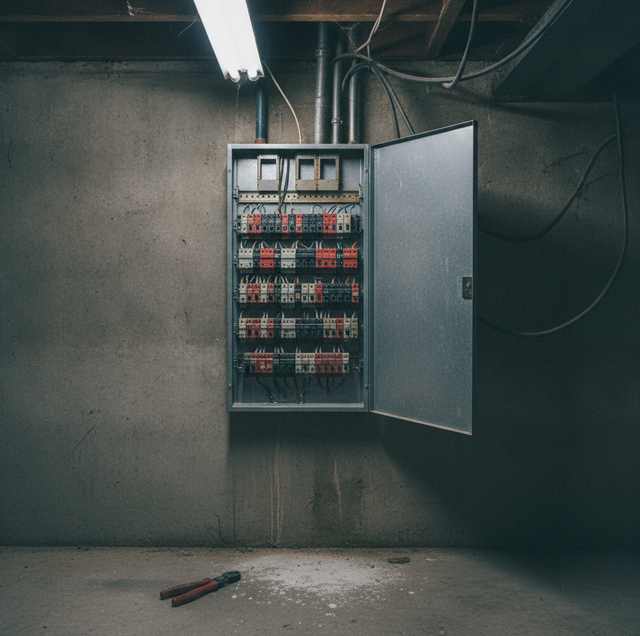
Quick Answer: Your home's electrical capacity is set by its service size in amps, measured at the main breaker in your panel. Older homes often ran on 60 or 100 amps, while a modern home with central AC, electric appliances, and an EV charger frequently needs 200. If breakers trip when large loads run together, lights dim across the house, or your panel has no room for new circuits, the service may be maxed out. A licensed electrician runs a load calculation to know for sure.
Most people never think about how much electricity their house can handle until something forces the question. A new EV in the driveway. A heat pump quote. A dryer that keeps knocking out the same breaker every laundry day. Underneath all of those moments is one number that quietly governs your whole home: your electrical service size.
That number is easy to overlook because it lives at the very top of your electrical panel and rarely changes on its own. But it sets a hard ceiling on how much power everything inside your walls can pull at once. Understanding where that ceiling sits and how to tell when you're bumping into it is the difference between confidently adding a big appliance and discovering the hard way that your panel can't carry it.
What Electrical Capacity Actually Means
Capacity is the total amount of electrical current your home can draw at any given moment, and it's expressed in amps. The utility feeds your house through a service line that lands at your main panel, and the main breaker at the top of that panel caps how many amps can flow in before it shuts everything off to protect the wiring.
Think of your home's service like a highway on-ramp. It doesn't matter how many cars want to merge; only so many lanes exist. A 100-amp service is a narrower ramp than a 200-amp one. Every device you switch on, from a phone charger to a central air conditioner, is another car trying to merge. As long as traffic stays under the lane limit, everything flows. Push past it, and the main breaker steps in like a metering light and stops the flow entirely.
Homes built or updated in the past decades were commonly wired for 60 or 100 amps, which was plenty when a household ran a furnace, a fridge, some lights, and a television. The modern home is a different animal. Central air conditioning, an electric range, an electric water heater, a dryer, a microwave, and increasingly an EV charger and a heat pump all want a share of that same ramp. That's why 200-amp service has become the common target for homes carrying today's electrical loads.
Signs Your Home May Be Short on Capacity
No single symptom proves your service is undersized, but several patterns point in that direction. The more of these you recognize, the more likely it is that the real limit is the capacity.
- Breakers trip when big loads overlap: If the microwave and the toaster coexist fine, but the AC plus the dryer plus the oven trips the main, the total demand is crowding the service rating rather than any one circuit failing.
- Lights dim when heavy equipment starts: A quick flicker when the air conditioner kicks on can be routine. Lights that visibly sag throughout the house every time a large motor starts suggest the service is stretched thin.
- The panel has no open slots: Look inside and count the empty spaces on the breaker rows. If there's nowhere to land a new breaker, you can't add circuits without addressing the panel first.
- Extension cords and power strips are permanent fixtures: Relying on them to reach outlets in every room often means there aren't enough circuits for how you actually live.
- The panel or its cover feels warm: Warmth at the panel is never something to shrug off and warrants a professional look.
- You still have a fuse box or a known-problem panel: A fuse panel, or certain older panel brands with a troubled service record, is a strong signal that the whole system predates modern demand.
- You want to add a major load: An EV charger, a heat pump, a hot tub, or a fully powered workshop. Each pulls serious current, and any of them can push a borderline service over the edge.
Seeing one item on this list isn't a verdict. Seeing four or five together is a good reason to have the service evaluated before you add anything else.
How a Pro Measures Your Real Capacity
Guessing at capacity by eyeballing your appliances is unreliable, because the way loads add up isn't as simple as summing every nameplate. Electricians work from three concrete reference points.
The first is the main breaker's amp rating, the number stamped right on the breaker at the top of the panel. That figure is your service ceiling. It's the single most important number in the whole conversation, and it takes ten seconds to read once you know where to look.
The second is the panel's physical layout, meaning how many circuit positions exist and how many are already filled. A panel can be nowhere near its amp limit yet completely full of breakers, or it can have open slots but little headroom left in amps. These are two separate constraints, and they fail independently.
The third, and the one that settles the question, is a load calculation. This is a structured method an electrician uses to add up your home's realistic electrical demand, accounting for square footage, fixed appliances, HVAC equipment, and anything you plan to add, then weigh that total against your service size. The calculation reflects how loads actually behave together rather than assuming everything runs at full tilt simultaneously. It replaces guesswork with numbers, and it's the honest answer to "can my panel handle this?"
Your Options When You're Short
Coming up short doesn't automatically mean the largest, most involved fix. The right solution depends on which limit you've actually hit, and there are three broad paths.
A service or panel upgrade raises the ceiling itself. If a load calculation shows your demand is pressing against the service rating, upgrading the service (commonly to 200 amps) gives the whole home more room. This is the answer when you're truly out of amps.
A subpanel adds circuit positions without raising the total capacity. It's fed from your existing service and gives you somewhere to land new breakers. A subpanel is the fix when you're out of physical space but still have amps to spare, such as wiring a detached garage or adding several circuits to a finished basement.
Load-management devices let you add a demanding load without a full service upgrade in some cases. These devices coordinate large loads so they don't all draw peak current at the same instant, which can make room for something like an EV charger on a service that couldn't otherwise spare the amps.
The distinction that trips up most homeowners is confusing "out of space" with "out of amps." Running out of slots is a subpanel problem. Running out of current is a service problem. They look similar from the outside, they call for different work, and only a proper evaluation tells you which one you're facing. Don't guess, and don't let anyone talk you into the bigger job before a load calculation confirms you need it.
Why This Comes Up Now
Two forces drive most capacity questions. The first is the aging housing stock: a lot of homes are simply operating on service sizes chosen for a much lighter electrical era, and they've quietly fallen behind what their owners now plug in. The second is the wave of large new loads. Every EV, every heat pump conversion, every backyard hot tub asks more of the service than the home was originally built to give.
One more point matters above all the rest: panel and service work is not a DIY project. Upgrading a service involves the utility, requires a permit, and must be performed by a licensed electrician. The main panel carries current even when the main breaker is off, and the coordination with the power company is not something to improvise. This is a job to hand off, both for your safety and to keep the work properly permitted and inspected.
Frequently Asked Questions
Open the panel door and read the number stamped on the main breaker at the very top, usually a two-pole breaker set apart from the others. That figure, commonly 100 or 200, is your home's service capacity. If instead you find an old fuse box, or the main reads 60 amps, that's a sign the service may be undersized for a modern household's demands.
A subpanel still counts toward the home's total load, so it adds circuit positions but does not add capacity, which is the key difference from a service upgrade that raises the ceiling itself. Running out of space means the panel has no open slots left to land another breaker. Running out of amps means the home's realistic demand is already crowding the service rating, so bolting on more slots would only invite you to overload a service that is already full. That is why the same-looking shortage sometimes calls for a modest subpanel and other times for the utility, a permit, and a heavier service.
A brief dimming the moment a big motor like the AC compressor or the dryer starts up can be normal inrush current, since motors draw a surge at startup. But lights that dim noticeably across the whole house whenever heavy loads run can signal an overloaded or undersized service. A load calculation is what confirms whether the dimming reflects a real capacity shortfall.
A load calc does not count every device at full power at once, because it applies demand factors and counts the larger of heating or cooling rather than both, so a house can safely carry more connected load than a straight amp total would suggest. The method totals the fixed appliances, a figure for general lighting and receptacles based on square footage, and the biggest motor loads, then discounts the parts that never peak together. The result is a realistic demand number, not a worst-case sum. That is why a home whose nameplate ratings appear to exceed its service can still test out as having room to spare.
A Level 2 charger commonly draws 40 to 48 amps continuously, a large steady load, and a load-management device pauses or throttles the charging when the air conditioner or oven is running, so the total stays under the service limit. Because vehicles charge mostly overnight, that coordination rarely means a slower charge in practice. The device sits between the charger and the panel and watches current, backing the car off only during the brief windows when other big loads spike. That is what lets a tight service take on a charger that a straight amp tally would say it cannot hold.
The clearest sign is the main breaker itself tripping rather than just a branch breaker, since that means the whole service, not one circuit, was overdrawn. Look also for a panel with every slot full or breakers double-tapped, where two wires share a lug never meant for it. The deciding test is a load calculation that comes out near or over the service rating. Any one of these alone is worth a look; together they say the service, not just the panel, is maxed out.
Book a service evaluation and load calculation — know exactly what your home can carry before you add that next big load. Zimmerman Electric Company serves Surprise, Sun City, and Peoria. Call (602) 497-3365.
