
Aluminum Wiring: What It Is and Why It's a Fire Concern
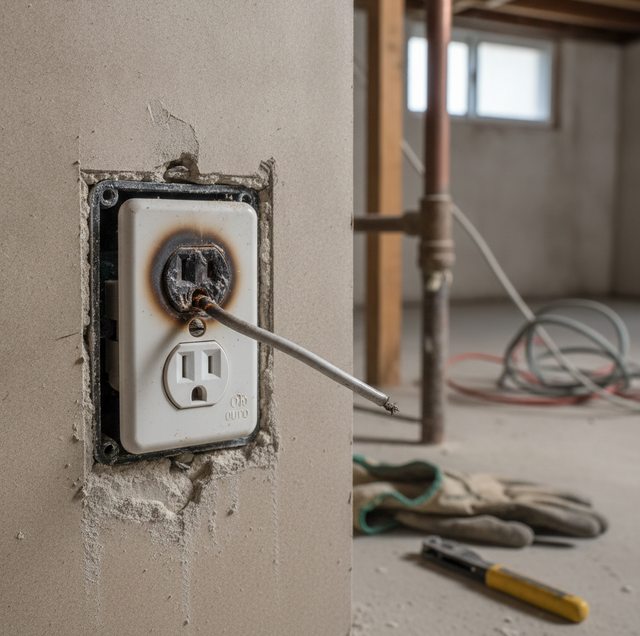
A cover plate that feels warm to the touch. Lights that flicker for no obvious reason. A faint smell of hot plastic near an outlet you rarely think about. In a house built in a certain window of years, those small signals can point back to one material buried in the walls: solid aluminum branch wiring. It is not a reason to panic, but it is a reason to know what you have and how it is handled.
Where Aluminum Wiring Came From
For a stretch running roughly from the mid-1960s into the mid-1970s, copper prices climbed sharply, and builders reached for a cheaper conductor to feed the outlets, switches, and lights inside new homes. That conductor was solid aluminum. It carried current well enough, it cost less, and for a while, it went into a large number of houses across the country. If your home dates to that era, there is a real chance some or all of its branch circuits are aluminum rather than copper.
The wiring itself was never the villain. Aluminum moves electricity just fine along the middle of a run. The concern lives somewhere more specific, and understanding that difference is the whole point of this article.
The Real Problem Is the Connections, Not the Wire
Think of the wire in the wall as a highway and every outlet, switch, and panel lug as an intersection. The open road is rarely where trouble starts. It is the intersections, the terminations, where things go wrong.
Aluminum behaves differently at those termination points than copper does. It expands and contracts more as it heats up under load and cools back down, and a house cycles through that heating and cooling countless times over the years as circuits carry current and then rest. With each cycle, aluminum swells and shrinks slightly more than the copper screw or terminal holding it, and over time, that repeated motion can loosen a connection.
Aluminum also oxidizes. When the bare metal meets air, it forms a thin surface layer, and unlike copper's oxide, aluminum's is a poor conductor. That film builds resistance right where a clean, tight contact is supposed to be. Add to that the fact that aluminum is a softer metal, so a terminal screwed down firmly can slowly deform the wire and let the joint relax. A loose or oxidized connection is a high-resistance connection, and high resistance under electrical load produces heat. That heat, concentrated at a single point behind a cover plate, is the actual hazard. It can scorch a device, char insulation, and in the worst case, start a fire.
So the mechanism is easy to picture: load cycling plus oxidation plus a soft metal equals joints that loosen and heat up. The fix, as you will see, targets the joints, not the wire running through the walls.
Warning Signs Worth Taking Seriously
Aluminum wiring does not announce itself, but a failing connection often does. Watch for these:
- Cover plates on outlets or switches that feel warm or hot
- Discoloration or a scorched look around a receptacle or switch
- Lights that flicker or dim without a clear cause
- Outlets or switches that stop working entirely
- A smell of hot plastic or burning insulation near a device
That last one matters most. If you smell burning plastic, do not investigate by poking at the outlet. Turn off the power to that circuit at the panel if you can do so safely, and call a licensed electrician. A hot connection behind a wall is not a wait-and-see situation.
How Aluminum Wiring Gets Identified
You do not have to guess. A few clues point the way, and a professional can confirm the rest.
The first clue is the home's age. A build date in that mid-1960s to mid-1970s range raises the question on its own. The second is the cable itself. Where wiring is visible, in the panel, in an attic, or in an unfinished basement, the outer jacket is often printed with the word ALUMINUM or the abbreviation AL right on the sheathing. Copper cable is marked differently or simply reads as copper. An electrician can go further and confirm what is actually landed on the outlets and switches, since a home can carry a mix from later remodeling work.
The Accepted Ways to Correct It
Once aluminum branch wiring is confirmed, there are established repairs that make it safe, and the right one depends on the home. None of these is a job for a homeowner with a screwdriver. This is licensed-electrician work, both for safety and because the materials have to be listed for the specific pairing of metals.
Pigtailing at each device: The most common approach leaves the aluminum in the walls and fixes the connections. A short length of copper wire, the pigtail, is joined to the aluminum using a connector rated for aluminum-to-copper joints, and then the copper end connects to the outlet or switch. Now the device only ever touches copper. The connectors matter here. Ordinary twist-on wire nuts are not the answer. Purpose-built devices such as the COPALUM crimp connector, which permanently crimps the two wires together, or an approved AlumiConn-type connector that clamps each wire under its own set screw, are what a professional reaches for.
CO/ALR-rated devices: Some outlets and switches are specifically built and rated to accept aluminum wire directly. These carry a CO/ALR marking, and their terminals are designed to handle aluminum's expansion and softness. Swapping in these rated devices is another accepted path.
A full rewire in copper: Where walls are open, or where access allows the old aluminum to be pulled and replaced, running new copper branch circuits removes the concern at its source. It is the most involved option, but in some homes, it is the cleanest one.
One thing every electrician will warn against: do not simply replace a worn outlet on an aluminum circuit with a standard off-the-shelf receptacle. A standard device is not rated for aluminum; its terminals can loosen against the softer wire, and you end up recreating the exact hot-spot problem the repair was supposed to solve.
Don't Confuse Branch Wiring With Your Service Cable
Here is a distinction that saves a lot of needless worry. The aluminum in this article is the smaller, solid aluminum wire that feeds branch circuits, outlets, switches, and lights. That is the material with the connection concern.
Aluminum shows up in another, entirely normal place: the large service and feeder cables that bring power from the utility into the panel and sometimes between panels. Those big aluminum conductors are standard, used every day in new installations, and installed with connectors and compounds made for them. Seeing aluminum on the main feed is not a red flag. The concern is specifically the small, solid aluminum branch wiring, not the heavy service cable.
If you know your home falls within that mid-1960s to mid-1970s window, or you have noticed a warm plate or a flickering light, the next sensible step is an inspection by a licensed electrician who can tell you what you actually have and, if needed, which correction is right for your home.
Frequently Asked Questions
Look for the AL or ALUMINUM stamp printed on the cable sheath, visible on any exposed run in the panel or attic, and consider the build era, since homes from the mid-1960s to mid-1970s are the most likely to have it. Two other flags often surface it: a home inspector will note it on the report, and an insurer may require an inspection to write or keep a policy on a house with aluminum branch wiring. Neither stamp nor era is proof alone, so have an electrician confirm at the devices.
The connections. The wire running through the middle of a cable does its job without issue. Trouble collects at the terminations, where aluminum's larger expansion and contraction under load, combined with the poorly conducting oxide layer it forms, work joints loose and build resistance. Those high-resistance joints are where heat concentrates, so a repair aims at the connection points rather than the length of wire.
Pigtailing joins a short copper lead to the aluminum wire with a connector listed for aluminum-to-copper joints, so the device only ever sees copper while the original aluminum stays in the wall. Not every connector is equal here: the crimp method known as COPALUM needs a manufacturer-certified installer and a special tool, while an AlumiConn-style screw connector can be installed by an electrician. Ordinary wire nuts are not an approved connection for aluminum. The point either way is to give each device a copper connection it is designed to handle.
No. A standard receptacle is not rated for aluminum, and its terminals can loosen against the softer metal and overheat, which is exactly the failure you are trying to prevent. Only a device marked CO/ALR on the strap is rated to take aluminum directly. Even then, the connection has to be done right, with an antioxidant paste on the wire and the terminal torqued to spec so the joint does not work loose over time. Short of that, a proper copper pigtail is the alternative.
No, and this trips people up. The large aluminum conductors in a service entrance or feeder cable are normal and are still installed safely in new work today. The concern in older homes is the smaller, solid aluminum branch wiring that feeds outlets and switches. Aluminum on the main service feed is not a warning sign; the branch circuits are the ones worth checking.
Not necessarily. Correcting the connection at every device, often dozens of outlets, switches, and fixtures, can make the system safe without opening walls at all. A full copper rewire instead means fishing new cable through those walls, so the amount of access you have and the sheer number of devices are what drive which route makes sense. On a small home with easy access, the rewire may be practical; on a larger one, fixing connections is usually the lighter touch.
Book an aluminum wiring inspection — protect an older home before a hot connection becomes a hazard. Zimmerman Electric Company serves Surprise, Sun City, and Peoria. Call (602) 497-3365.
