
Why Your Lights Dim When the AC Kicks On
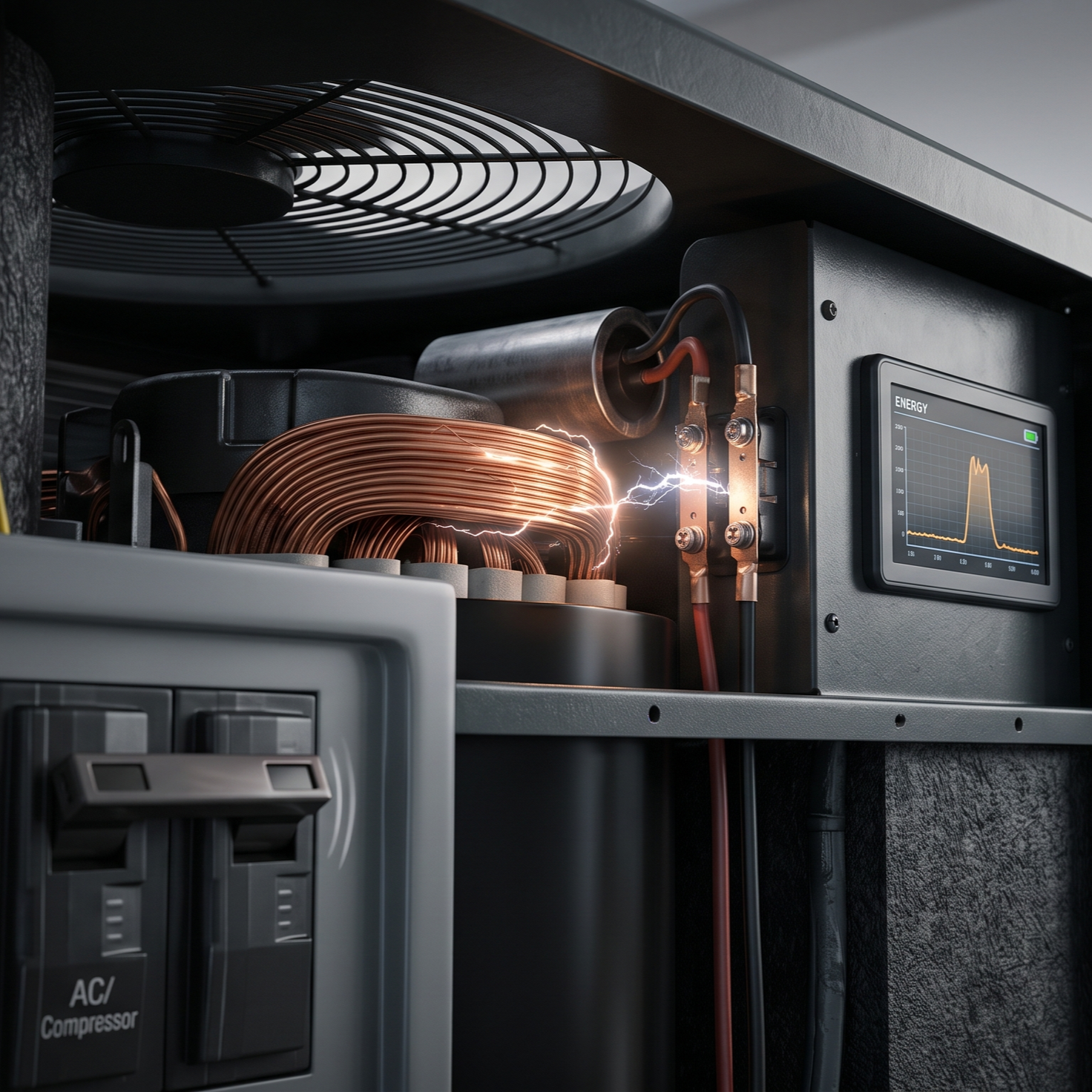
Quick Answer: A brief, slight dim when the AC starts is usually normal — the compressor pulls a big surge of current at startup, momentarily dropping voltage. It becomes a concern when the dimming is pronounced, lasts more than a flicker, affects the whole house, or is getting worse. That can mean an overloaded or undersized electrical service straining under the AC load, a loose or corroded connection (a fire risk), or a need for a dedicated circuit or hard-start kit. Occasional faint dimming is fine; frequent or worsening dimming in a desert home running heavy AC is worth an electrician's look.
You're sitting in the living room, the air conditioner clicks on, and for a split second, the lights dip before steadying. In an Arizona summer, where the AC cycles constantly, you might see it a dozen times a day. Sometimes it's completely normal and nothing to worry about — and sometimes it's your electrical system telling you it's straining. The difference is in how much the lights dim, how long it lasts, and whether it's getting worse.
Why Starting the AC Dips the Lights at All
An air conditioner's compressor is a large motor, and motors draw a big surge of current the instant they start — far more than they use while running. This is called inrush current, and it can be several times the normal draw for a fraction of a second. That brief, heavy demand momentarily pulls the voltage down across your electrical system, and your lights, sensitive to voltage, dip in response. Then the compressor settles into its running speed, the draw drops, and the voltage recovers — so the lights brighten back up. A quick, slight dim at that startup moment is the system behaving exactly as the physics predicts.
So the real question isn't "why do the lights dim at all" — that's expected — but "is this dimming normal, or is it a sign of a problem?"
When the Dimming Is Normal
A momentary, mild dip right as the AC kicks on, that recovers immediately, is generally nothing to worry about. It's the visible side effect of that startup surge, and in homes everywhere, lights dim slightly when a big motor starts. If the dimming is brief, subtle, only at startup, and not changing over time, it's almost certainly just the normal inrush surge and not a fault.
When the Dimming Signals a Problem
The dimming crosses from normal to concerning when one or more of these are true: it's pronounced rather than subtle, it lasts longer than a quick flicker, it affects lights throughout the whole house noticeably, or it's been getting worse over time. Those patterns suggest the system is struggling more than it should with the AC's demand, and a few causes are worth understanding.
An Overloaded or Undersized Electrical Service
If your home's electrical service is undersized or already heavily loaded, the AC's startup surge pulls voltage down more than a healthy, well-sized system would, causing deeper, more noticeable dimming. This is common in older desert homes whose service was sized for far lighter demand than a modern household with heavy air conditioning. Pronounced whole-house dimming often points here.
A Loose or Corroded Connection
This is the cause that makes dimming a safety issue rather than a nuisance. A loose or corroded connection — at the panel, a breaker, the meter, or in the wiring — adds resistance that worsens the voltage drop when a big load starts, and that same loose point generates heat as current passes through it. Heat at a connection is a fire risk. Worsening dimming, especially with warm switch plates, buzzing, or a faint burning smell, can indicate a loose connection that needs prompt attention.
A Missing Dedicated Circuit or Hard-Starting Compressor
A large AC should be on its own dedicated circuit sized for its load. If it isn't, or if the compressor is aging and "hard starting" — struggling to get going and pulling an even bigger surge — the dimming can be more severe. A hard-start kit or proper circuit can sometimes ease the startup surge, which an electrician or HVAC pro can advise on.
| What you observe | Likely meaning | Concern level |
|---|---|---|
| Brief, slight dim at startup, then recovers | Normal inrush surge | Low — typical behavior |
| Pronounced, whole-house dimming | Overloaded or undersized service | Moderate — evaluate capacity |
| Dimming worsening over time | Possible loose connection | High — have it inspected |
| Dimming with warm switches or burning smell | Loose, overheating connection | High — fire risk, call now |
If the dimming is accompanied by warm or discolored switch plates, a buzzing sound, or a burning smell, stop and treat it as urgent. Those signs point to a loose, overheating connection that can cause a fire. Don't investigate inside the panel yourself — contact a licensed electrician right away.
How to Tell Which You Have
Watch the pattern over a few AC cycles. If the dim is a quick, faint dip that recovers right away and isn't changing, it's the normal startup surge — no action needed. If it's deep, lingering, whole-house, worsening, or paired with any warning sign like heat or a burning smell, treat it as a real electrical issue. Those causes — an overloaded service, a loose connection, or a circuit problem — involve the panel and wiring, carry shock and fire risk, and call for a licensed electrician, especially in an older home running heavy summer AC loads.
Frequently Asked Questions
A brief, slight dim right as the AC kicks on is usually normal. The compressor is a large motor that draws a surge of current — inrush current — at startup, which momentarily pulls voltage down before recovering. Lights everywhere dip slightly when a big motor starts. As long as it's quick, subtle, only at startup, and not getting worse, it's typically just expected behavior rather than a fault.
Worry when the dimming is pronounced rather than subtle, lasts longer than a quick flicker, affects the whole house, or gets worse over time —especially if it comes with warm switch plates, buzzing, or a burning smell. Those patterns suggest the system is straining more than it should or has a loose, overheating connection. That combination warrants having a licensed electrician inspect it.
Yes. If your service is undersized or heavily loaded, the AC's startup surge drops the voltage more than a healthy, well-sized system would, causing deeper, more noticeable dimming. This is common in older desert homes whose electrical service was built for much lighter demand than modern heavy air conditioning requires. Pronounced, whole-house dimming when the AC starts is a reason to have your panel and service capacity evaluated.
They can be, when the cause is a loose or corroded connection. Such a connection both worsens the voltage drop and generates heat as current flows through it, and heat at an electrical connection is a fire risk. Dimming that's worsening or paired with warm switches, buzzing, or a burning smell is a warning sign that should be inspected promptly rather than ignored, since the underlying connection can overheat.
Sometimes. Ensuring the AC is on a properly sized dedicated circuit helps, and for a compressor that's hard-starting, a hard-start kit can ease the startup surge. If the cause is an overloaded service, a panel upgrade may be the real solution. The right fix depends on the underlying cause, so an electrician (sometimes with an HVAC tech) can determine what will actually reduce the dimming safely.
Read the Dip Before You Worry About It
Lights dimming when the AC turns on is usually just the normal startup surge — a big motor pulling inrush current and briefly dropping the voltage before it recovers. That quick, subtle dip is nothing to fear. The time to act is when the dimming is pronounced, whole-house, worsening, or paired with heat or a burning smell, because those points to an overloaded service or a loose, overheating connection. Watch the pattern, and when it looks like more than a normal flicker, bring in a licensed electrician before a strained system becomes a hazard.
Lights dimming hard every time the AC kicks on? — Get your panel and connections checked by licensed West Valley electricians. Zimmerman Electric Company serves Surprise, Sun City, Peoria. Call (602) 497-3365.
