
Surge Protectors vs Power Strips: What Actually Protects You
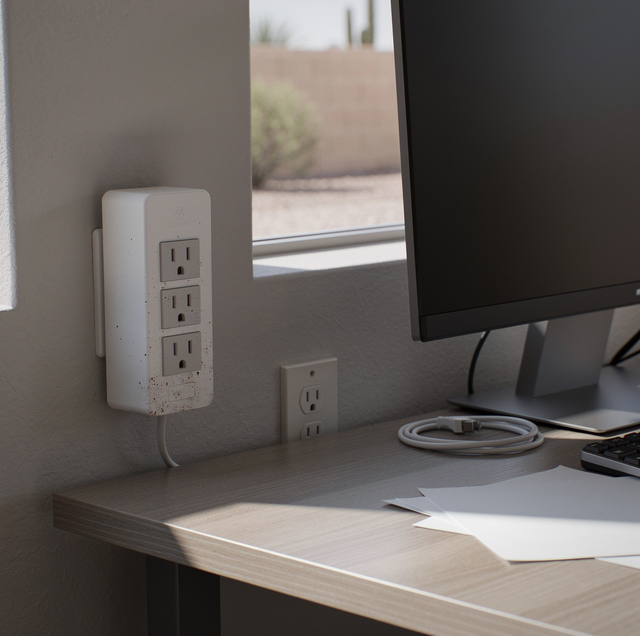
A lot of the strips people call "surge protectors" are actually just power strips, extra outlets with an on/off switch and maybe an overload breaker, with no real surge protection built in at all. The two look nearly identical, sit in the same spot behind a desk or TV, and cost nearly the same amount, which is exactly why so many electronics end up damaged by a surge while their owners assume the whole time they are covered.
What a Power Strip Actually Does
A power strip multiplies outlets and often includes an overcurrent breaker, which protects against overloading the strip itself, too many devices drawing too much combined current through one small unit. That's a completely different job from absorbing a voltage spike. The strip's breaker reacts to sustained excess current, not to a surge that arrives and passes in a fraction of a second, faster than any mechanical breaker could ever respond to it.
What a Surge Protector Adds
The component that provides real surge protection is called a metal oxide varistor, or MOV. It sits inside the device doing nothing at normal voltage, then conducts excess voltage away from the protected outlets and into the ground wire the instant the voltage crosses a set threshold, before resetting to block normal current. Two numbers describe how well it does that job: joule rating, the MOV's total capacity to absorb energy before it degrades, and clamping voltage, the threshold at which it actually kicks in. A lower clamping voltage means it reacts sooner, and a higher joule rating means it can absorb more total surge activity over its life before wearing out.
The Difference That Doesn't Show on the Outside
An MOV doesn't disappear after doing its job once, but it does wear down. Repeated smaller surges, a compressor cycling on a shared circuit, and a lightning strike a few streets away gradually consume the MOV's capacity, even when the protector never visibly indicates anything happened. That means a surge protector that's absorbed several years of ordinary electrical noise can be down to little or no real protection left while still passing power normally, looking completely indistinguishable from the day it was new. Some higher-end protectors include a separate indicator light specifically for MOV status, in addition to the plain power light, which is the only outward sign that this kind of gradual failure has occurred.
Power Strip vs. Plug-In vs. Whole-House
| Power strip | Plug-in surge protector | Whole-house surge protector | |
|---|---|---|---|
| What it protects against | Overloading the strip itself | Voltage spikes at connected devices | Voltage spikes entering at the panel |
| Key component | Simple overcurrent breaker | MOV(s) with a joule rating | Larger MOV(s) installed at the panel |
| Degrades silently over time | No, the breaker either trips or it doesn't | Yes, the MOV wears down with repeated smaller surges | Yes, though sized to absorb far more before depleting |
| Where installed | Anywhere, portable | Anywhere, portable | Installed by an electrician at the panel |
| What it doesn't cover on its own | Any surge protection at all | A surge already inside the house wiring beyond it | Smaller surges point-of-use protectors are built to catch downstream |
Where a Whole-House Protector Actually Connects
A whole-house surge protector is installed directly at the main panel, wired to a dedicated breaker, with its MOVs bridging the incoming line to the panel's ground bus. Electricians generally describe this kind of device as a Type 2 surge protective device, a classification based on where it sits in the electrical system rather than a brand name, distinct from the smaller Type 3 devices built into plug-in strips. Because it sits at the single point where all of the home's wiring branches out, one properly sized unit at the panel covers every circuit in the house at once, rather than needing a plug-in protector at every outlet that matters.
Common Surge Sources Most People Don't Expect
Lightning gets most of the attention, but it isn't the most frequent cause of the smaller surges that wear an MOV down over time. Utility grid switching, when a utility company reroutes power during maintenance or after an outage elsewhere on the grid, sends a brief voltage spike through everything connected to that line. Inside the home, any motor that cycles on and off- a well pump, a garage door opener, an air conditioning compressor- generates a smaller spike of its own each time it switches off, since a motor's magnetic field collapsing releases energy back into the circuit for an instant. None of these single events are usually enough to damage anything on their own, but they add up against an MOV's total capacity the same way hundreds of small deposits add up against a joule rating meant to be spent gradually, not all at once.
Why Whole-House and Plug-In Protection Work Best Together
A whole-house unit installed at the panel catches the largest surges, a nearby lightning strike, a utility grid switching event, before they travel deep into the home's wiring. Plug-in protectors at each sensitive device catch a different category entirely: smaller surges generated inside the home itself. An air conditioner compressor, a refrigerator motor, or a pool pump cycling off all create their own small voltage spikes on the home's internal wiring, spikes that never travel back to the panel and so are never touched by a whole-house unit. Relying on only one layer leaves the very gap the other layer is meant to cover, which is why electricians typically recommend both rather than treating them as alternatives.
Why a Whole-House Unit Isn't a DIY Project
Installing a plug-in protector is as simple as plugging it in, but a whole-house unit connects directly to the panel's bus bar, the same live component that makes any panel work dangerous without the right training and equipment. That connection point carries full house voltage at all times, main breaker on or off, which is why this installation is always handled by a licensed electrician rather than added the way you'd add a plug-in strip.
What to Actually Look For When Buying One
Joule rating matters more for anything protecting expensive electronics, a home office setup or a home theater, and matters less for something low-value like a lamp. Clamping voltage should be as low as the product offers, since a lower number means faster reaction. The most reliable indicator that a strip has real protection inside is a genuine UL 1449 surge-protective-device listing printed on the label, along with an actual joule rating. A strip that only says "surge protection" in its marketing copy, without listing a joule number anywhere on the packaging or the unit itself, usually doesn't have a real MOV inside at all.
Frequently Asked Questions
A light labeled that way, without any joule rating listed anywhere on the strip or its packaging, usually just indicates the strip is receiving power, not that any MOV or surge component is present. The joule rating printed on the unit is the reliable indicator, not the wording next to the light.
Without a dedicated MOV-status indicator light, a feature only found on some models, there's no way to tell from the outside. For equipment that matters, the more reliable approach is to replace plug-in surge protectors every few years on a schedule rather than assuming that one still powering devices is actively protecting them.
No, and it isn't meant to make outlet-level protection optional. Many surge protector manufacturers back their connected-equipment warranty only when the device itself is in place at the outlet, not just somewhere upstream in the house, and a plug-in unit's clamping voltage is typically set lower than what's practical to build into a single device protecting an entire electrical service. The two aren't a redundant pair where one makes the other unnecessary; they're sized for different jobs, and skipping one removes a category of coverage the other was never designed to provide.
A surge protector with a failing or overloaded MOV can generate heat internally as it degrades, which is part of why units with a real UL listing include a thermal fail-safe that disconnects the MOV before it overheats. An off-brand unit without that listing may not have the same built-in protection.
No. A UPS includes surge protection components but also adds a battery that keeps connected equipment running briefly during a power outage, something a surge protector or power strip can't do, since neither has a battery inside at all.
It accomplishes more for that specific storm, since nothing plugged in can be hit at all, but it only protects what you remember to unplug and only during the window you're actually disconnected. That's why surge protection matters most for everything running continuously- refrigerators, routers, security systems- that nobody unplugs every time weather rolls through.
Check the label before you trust a strip to protect anything expensive. No joule rating and no UL 1449 listing printed anywhere on it means treat it as a power strip, not surge protection, and look for a replacement that actually prints both numbers on the box.
Not sure if your home's electronics have real surge protection? Ask about a whole-house surge protector during your next visit. Zimmerman Electric Company serves Surprise, Sun City, and Peoria. Call (602) 497-3365.
