
Why Your Outlet Sparks and When That Means Trouble
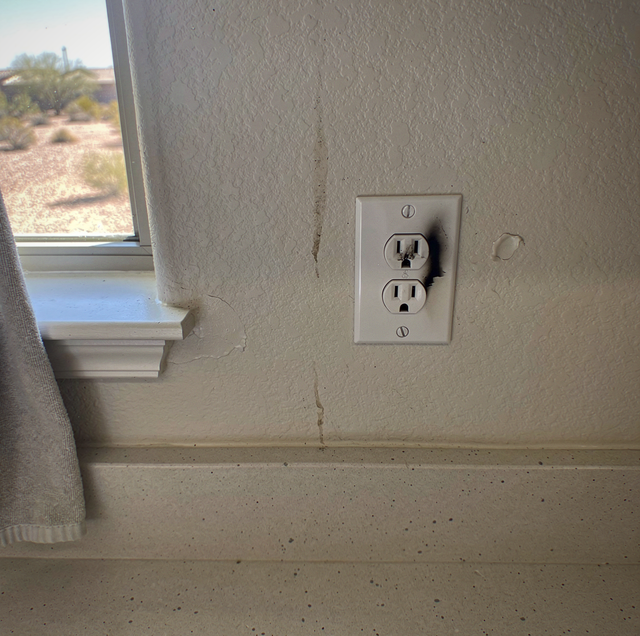
A small blue-white flash the instant a plug's prongs touch the contacts inside an outlet is common, and on its own it doesn't mean anything is wrong. What matters is the pattern: Does it happen with one specific plug or every plug, only under a heavy load, or does it leave a mark behind? Those differences point to real, distinct causes: some are a normal side effect of how outlets are built, and some are a sign that a connection or the receptacle itself has already failed.
Why Any Outlet Can Spark a Little
At the instant a plug is inserted, there's a fraction of a second where the prongs and the outlet's internal contacts aren't yet making full metal-to-metal contact, and current can jump across that tiny gap before the connection seats. That's especially true if the device being plugged in is already switched on, a lamp, a vacuum, a shop light, so current starts flowing the moment contact happens rather than after the plug is fully seated. That kind of momentary spark is a normal side effect of making a connection under load, not evidence of a fault.
When Sparking Points to a Real Problem
Worn receptacle contacts: Every outlet has small spring-loaded contact blades inside that grip a plug's prongs. Years of plugging and unplugging wear down that spring tension, and once it's gone, a prong doesn't seat fully, so every insertion arcs a little more than the last. Left long enough, this leaves small black scorch marks around the slots.
A loose wire connection behind the outlet: This is the same mechanism that causes a burning smell in a panel or receptacle, but here it appears visibly at the plug instead. A spark that happens even before anything plugged in is switched on shouldn't occur with a correctly seated connection, and it's a sign the wire itself, not just the receptacle's contacts, has come loose.
A circuit already near its capacity: Plugging a heavy-draw device, a space heater or a window air conditioner, into a circuit that's already close to full load produces a bigger spark because the outlet has to deliver a large jump in current all at once. That's a load issue more than a broken receptacle, but repeated heavy sparking still wears the contacts faster over time.
Moisture inside the receptacle: Sparking at an outdoor or bathroom GFCI outlet during humid conditions can indicate that water has found its way into the receptacle housing. Water bridging two contacts creates its own tiny arc path that has nothing to do with the inserted plug.
What the Look of the Spark Tells You
| What you notice | Likely cause | What to do |
|---|---|---|
| Tiny flash only when plugging in something already switched on | Normal make-contact arc | No action needed |
| Spark plus the plug feels loose or wiggles once inserted | Worn receptacle contacts | Have the receptacle replaced |
| Spark even when nothing plugged in is turned on yet | Loose wire connection behind the device | Stop using that outlet; call an electrician |
| Bigger-than-usual spark only with one high-draw appliance | Circuit near its rated capacity for that load | Move the appliance to a dedicated circuit or a different outlet |
| Spark at an outdoor or bathroom outlet after rain or steam | Moisture inside the receptacle | Have the outlet and its weatherproof cover inspected |
How an Electrician Diagnoses a Sparking Outlet
The receptacle usually gets pulled from the wall so the wire gauge and connection type can be inspected directly. Scorch marks on the metal yoke, the strap that holds the outlet to the box, show how much heat has already built up over time, and contact tension gets checked by feel or with a plug gauge. Whatever's plugged in when the sparking happens also gets checked against the circuit's actual breaker rating, since a device drawing more than the run was ever sized for is a different fix than a worn-out receptacle.
Why You Shouldn't Just Keep Using a Sparking Outlet
Once contacts have arced enough times, the metal itself pits and roughens at the point of contact. Rougher metal means more resistance, and more resistance at that same spot means more arcing on the next use, not less. It's a cycle that gets worse with use rather than settling into something stable, which is why a receptacle that's been sparking for months isn't "fine because it hasn't caused a problem yet." It's further along the same failure path than it was when you first noticed.
Why Kitchen and Shop Outlets Wear Out Faster Than Others
Not every outlet in a house ages at the same rate. A receptacle in a kitchen, garage, or home workshop gets plugged and unplugged far more often than one behind a couch that a lamp has sat in for a decade, and every insertion cycle wears the contact springs down a small amount. An outlet feeding a toaster, mixer, or power tool that gets moved and reconnected regularly reaches the point of worn contacts years before a rarely disturbed outlet in a bedroom does, which is why sparking tends to show up first in exactly the rooms getting the heaviest daily use rather than spreading evenly through the house.
Frequently Asked Questions
A spark on a device that's never been plugged in before is more likely dust or slight manufacturing residue on the contacts than actual wear, and it should stop after the first couple of uses. If it keeps happening past that, the outlet or the connection behind it is worth checking.
Only if the spark is severe enough to create a genuine short or ground fault. Ordinary insertion sparking usually isn't enough current to trip anything, which means a sparking outlet that isn't tripping its breaker can still be quietly wearing itself down without any other warning.
A worn two-prong outlet has no ground path at all, so any arcing fault has nowhere to go except through whatever's plugged in, or through a person touching it. That's one more reason ungrounded outlets get flagged during a safety inspection even when they've never visibly sparked.
Pulling a plug while a device is actively drawing current, rather than switching it off first, breaks a live connection under load, and that break produces its own small arc through roughly the same mechanism as plugging something in already switched on. Turning a device off before removing the plug avoids it entirely.
A power strip's own switch and internal fuse don't change what's happening inside the wall outlet it's plugged into. If the wall receptacle itself is arcing on insertion, adding a power strip just puts one more connection point downstream of the actual problem; it doesn't fix it.
There's no fixed lifespan for a residential receptacle, but heavy-use outlets, kitchen counters, home offices where cords get swapped often, and those that have seen a decade or more of regular use are common candidates for proactive replacement during a routine inspection. Spring-contact tension degrades gradually and invisibly long before a spark ever shows up to announce it.
Match what you're seeing against the patterns above, then act on that instead of the spark itself. A worn receptacle and a loose wire connection can look nearly identical for that split second, but one gets fixed with a five-minute swap, and the other means calling someone before you use that outlet again.
Noticing sparks every time you plug something in? Have the outlet and its circuit checked before it fails further. Zimmerman Electric Company serves Surprise, Sun City, and Peoria. Call (602) 497-3365.
