
How Monsoon Power Surges Fry Your Electronics
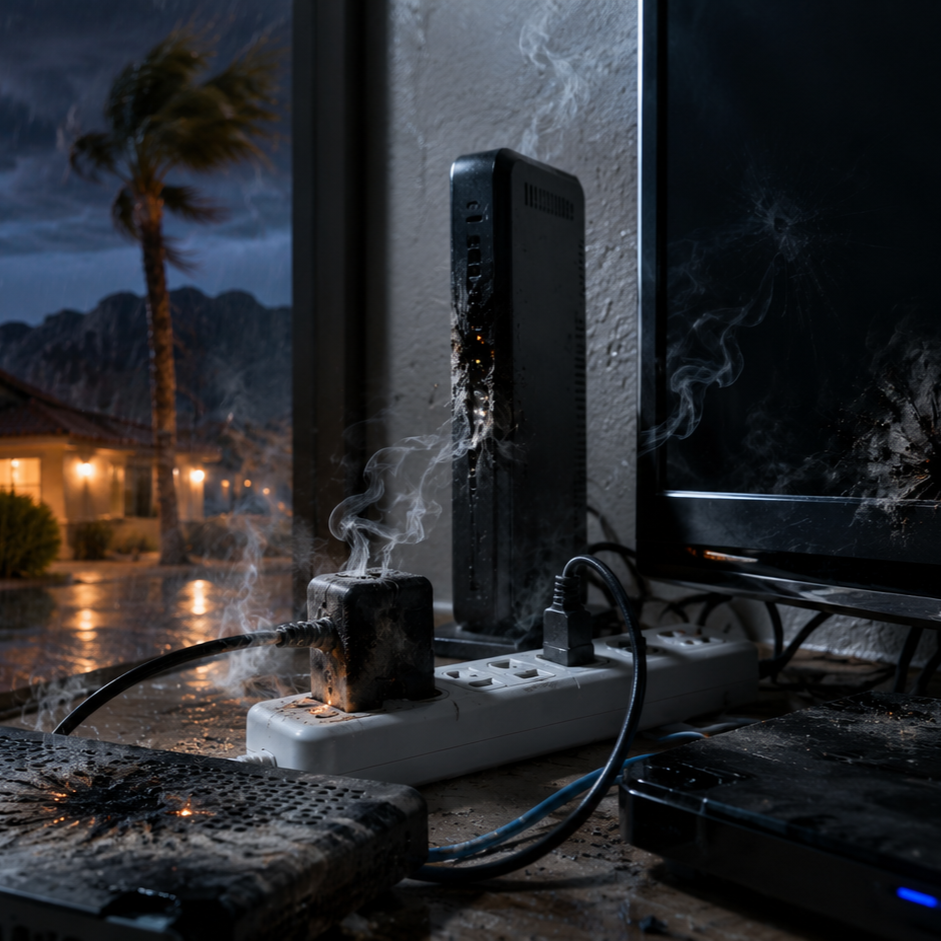
Quick Answer: Monsoon storms cause power surges — brief, sharp spikes in voltage — from lightning strikes near power lines and from the grid flickering as power is lost and restored. Those spikes travel through your home's wiring and hit anything plugged in, especially devices with sensitive circuit boards and chips. A big surge can destroy electronics instantly; smaller, repeated surges degrade them over time until they fail early. The best protection is layered: a whole-house surge protector at the panel as the first line of defense, plus quality point-of-use surge protectors on valuable electronics.
The monsoon rolls in, the sky goes dark, lightning cracks somewhere over the valley, and the lights flicker — or the power drops entirely for a second and comes back. You might not think much of it until a few days later when the garage door opener acts strange, the TV won't turn on, or the AC's control board is fried. Monsoon season is hard on home electronics, and the culprit is usually a power surge you barely noticed at the time. Understanding how these surges work is the first step to keeping them from quietly destroying your equipment.
What a Power Surge Actually Is
Your home's electrical system is designed to run at a steady voltage. A power surge is a brief, sharp spike above that normal level — sometimes lasting only a tiny fraction of a second, but carrying enough excess energy to overwhelm whatever it reaches. Think of it like a sudden, violent pressure spike in a water pipe: the pipe is built for normal pressure, and a hard enough spike bursts something. In electronics, the "something" that bursts is the delicate circuitry inside your devices.
Monsoon storms are the prime surge season for two reasons, and both are common in the desert summer.
Where Monsoon Surges Come From
Lightning
The most dramatic source is lightning. A direct strike is rare but catastrophic, sending an enormous surge through anything connected. Far more common is a nearby strike — lightning hitting a power line, a utility pole, or the ground near your home — which induces a powerful surge that travels along the utility lines and into your house. You don't need a direct hit for lightning to damage your electronics; a strike blocks away can do it.
Grid Flickers and Power Restoration
The other big source is the grid itself reacting to the storm. When monsoon winds and lightning cause the power to drop and then come back — those flickers and brief outages you see — the moment power is restored often brings a surge as electricity floods back into the system. Repeated outages and restorations during a single storm can send multiple surges through your home, even without a single lightning bolt hitting nearby.
How Surges Damage Your Devices
Modern electronics are especially vulnerable because they run on low-voltage circuit boards, microchips, and sensitive components that are easily overwhelmed by excess voltage. The damage happens in two ways, and the slow one is the sneaky part.
A large surge — like from a close lightning strike — can destroy a device instantly, frying its circuitry in the spike. That's the obvious, dramatic failure. But smaller surges, which happen far more often, cause cumulative damage: each minor spike degrades the components a little, and over many storms and many surges, the wear adds up until the device fails "for no reason" months later. People often blame the device for dying young when the real cause was a season of small surges chipping away at it.
The most at-risk items are anything with electronics: TVs and computers, the control boards in your AC and major appliances, garage door openers, networking gear, and smart-home devices. In a desert home, the AC's electronic controls are a particular concern, since losing them in peak summer is both expensive and miserable.
| Surge source | How it reaches you | Typical damage |
|---|---|---|
| Direct lightning strike | Straight through connected lines | Catastrophic, instant destruction |
| Nearby lightning strike | Induced surge along utility lines | Severe; can destroy electronics |
| Grid flicker / power restoration | Spike as power floods back | Instant or cumulative damage |
| Repeated small surges | Many minor spikes over a season | Gradual degradation, early failure |
How to Protect Your Home: Layered Defense
The reliable approach to surge protection is layers, because no single device catches everything. The two layers work together.
The first line of defense is a whole-house surge protector installed at your electrical panel by an electrician. It intercepts large surges from the utility lines —lightning-induced and grid-restoration spikes — before they spread through your home's wiring, protecting everything downstream. This is the foundation, because it stops the big surges at the door.
The second layer is point-of-use surge protectors — quality surge-protector strips (not just basic power strips, which offer little real protection) on your most valuable and sensitive electronics. These catch smaller surges that get through and any generated inside the home. Together, the whole-house unit and good point-of-use protectors give your electronics far better odds against a monsoon season.
Not all "surge protectors" are equal, and a basic power strip is mostly just extra outlets, not real protection. For point-of-use protection, look for an actual surge protector with a meaningful joule rating, and remember that surge protectors wear out over time and need replacing — they don't last forever.
Frequently Asked Questions
Yes, and that's actually the most common scenario. A lightning strike near your home — hitting a power line, utility pole, or the ground nearby — induces a surge that travels along the utility lines into your house, no direct hit required. Grid flickers and the surge when power is restored after an outage also damage electronics. You don't need to be struck to suffer surge damage during a monsoon storm.
Because surges cause cumulative damage as well as instant destruction. Smaller surges — far more common than catastrophic ones — degrade a device's components a little at a time. Over many spikes across a monsoon season, that wear builds until the device fails seemingly out of nowhere, weeks or months later. The earlier surges set up the failure, even though the device kept working at the time.
A basic power strip simply provides more outlets and offers little to no protection against voltage spikes. A real surge protector is designed to divert excess voltage from your devices, and quality ones carry a meaningful joules rating indicating how much surge energy they can absorb. For protecting electronics, you want an actual surge protector, not just a power strip — and even good ones wear out and need periodic replacement.
For a home in monsoon country, it's a strong first line of defense. A whole-house surge protector installed at the panel intercepts large surges coming in from the utility lines — the lightning-induced and grid-restoration spikes that do the most damage — before they reach your wiring and devices. Given how surge-prone the monsoon season is and how much modern homes rely on electronics, it's a worthwhile foundation, ideally paired with point-of-use protectors.
Yes. Surge protectors, both whole-house units and point-of-use strips, absorb surge energy over time and gradually lose their protective capacity, so they don't last forever. A protector that has taken many hits may no longer offer real protection, even though it still powers your devices. It's worth knowing they have a finite life and replacing point-of-use protectors periodically, and having a whole-house unit checked as part of electrical maintenance.
Stop the Spikes Before They Reach Your Devices
Monsoon power surges — from nearby lightning and from the grid flickering as power drops and returns — send brief, sharp voltage spikes through your wiring that can destroy electronics instantly or wear them down over a season until they fail early. Modern devices, including your AC's control board, are especially vulnerable. The protection that actually works is layered: a whole-house surge protector at the panel to stop the big surges, plus quality point-of-use protectors on your valuable electronics. Set that up before the storms, and monsoon season stops being a threat to everything you've plugged in.
Want to protect your electronics before monsoon season? — Get whole-house surge protection installed by licensed West Valley electricians. Zimmerman Electric Company serves Surprise, Sun City, Peoria. Call (602) 497-3365.
